

Accountability Doesn’t Take Three Years Off
When most people think of municipal politics, they picture a predictable cycle: a glossy flyer in the mailbox, a polite knock on the door every four years, and an avalanche of campaign promises. Once Election Day wraps up, the doors close, the email replies slow down, and residents are left wondering what actually happens behind closed doors at City Hall.
To me, accountability isn’t a seasonal catchphrase to dust off for campaign literature.
It is a daily, year-round standard of service.
Under Section 224 of the Ontario Municipal Act, 2001, one of the core statutory duties of council is ensuring the accountability and transparency of municipal operations. If we want local government that truly works for the people who fund it, we must raise the bar across three fundamental commitments:
1. Showing Up Between Elections, Not Just Before Them
Municipal governance does not pause between election cycles. Decisions affecting our roads, ditch drainage, park amenities, and property tax bills happen all year, every year. Whether it is attending neighborhood associations, participating in local festivals, or walking our ward streets, accessible leadership means being present when there isn't a ballot on the line. Being present in the community shouldn't be a four-year campaign tour—it must be the baseline expectation of the job.
2. Answering the Call (and the Inbox)
When a resident reaches out about missed road maintenance, stormwater management, or municipal by-laws, they shouldn’t be met with silence or an automated bounce-back. Responsive representation means treating every resident inquiry with urgency and respect, ensuring community members never feel ignored by the people elected to serve them.
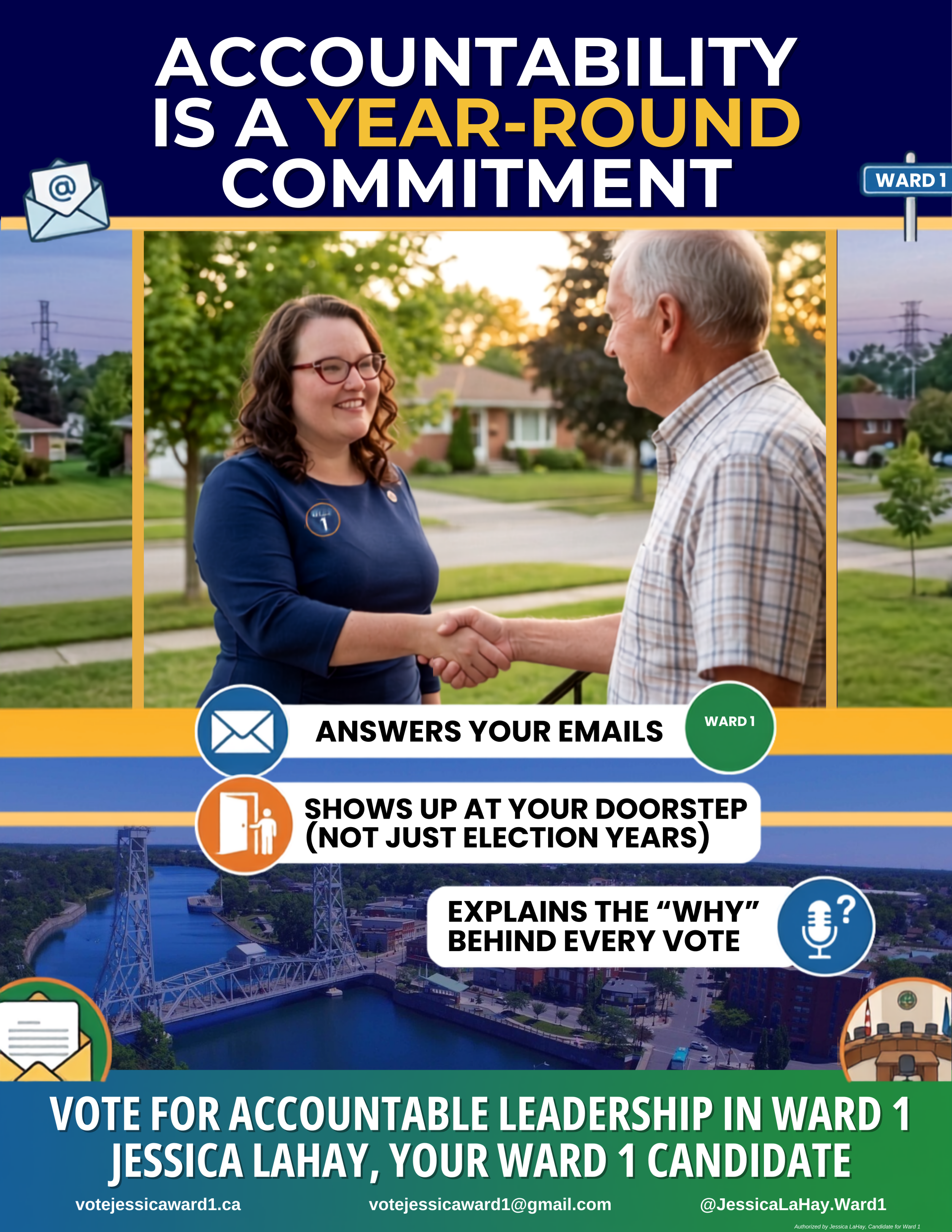
3. Explaining the "Why" Behind Every Vote
City Council makes decisions that directly shape infrastructure, neighborhood safety, public spending, and the protection of local agricultural land and green spaces. Residents shouldn’t have to guess why a councillor voted yes or no on a controversial zoning amendment, budget line item, or procedural motion.
This issue came directly to the forefront during Council’s debates over the Procedural By-law Review (Report CLK-2022-05), which was subsequently referred to legal and the City Clerk. Under proposed meeting rules, recorded votes are strictly structured so that once the roll call begins, members cannot speak or debate; they are restricted to stating only a simple "Yes" or "No."
While procedural mechanics inside council chambers are intended to maintain order and prevent eleventh-hour filibustering during a vote call, the rules of the chamber do not muzzle an elected official from communicating with their community.
Ontario municipal jurisprudence and Integrity Commissioner rulings consistently confirm that elected officials maintain the democratic right to explain their votes, share their rationale, and publicly express dissent. The only boundaries established by provincial law are:
- Upholding the confidentiality of closed in-camera matters under Section 239 of the Municipal Act (such as litigation, property acquisitions, and identifiable personnel matters).
- Complying with civil standards under the local Council Code of Conduct.
If procedural rules restrict the floor to a "Yes" or "No" vote at the microphone inside City Hall, it makes external transparency outside the chamber even more vital. You can track upcoming agendas and official meeting minutes directly through the City of Welland Council Agendas and Minutes Portal.
Add comment
Comments