

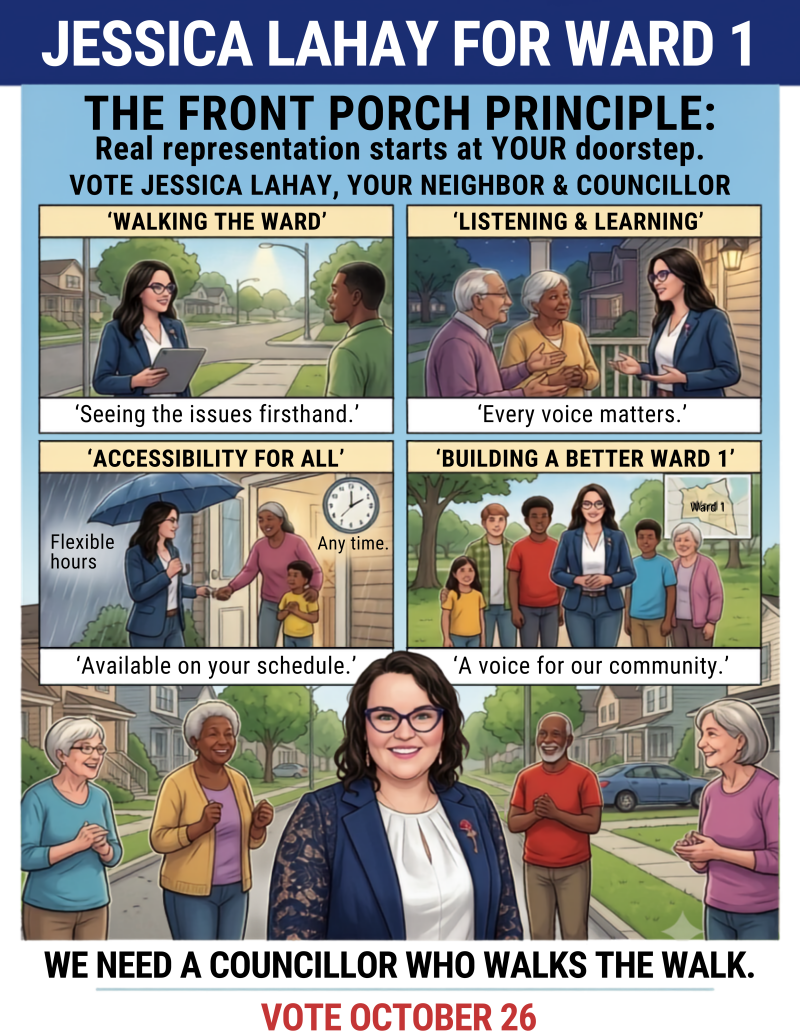
Municipal government is unique because it is the only level of democracy where policy directly touches everyday routines. It isn't debated across television studios or managed strictly from behind a screen; it lives at the curb, down residential streets, and on the front steps of our homes. When you ask a community for the privilege to represent them, you are asking for their faith. That faith is not built through mailed postcards, filtered social media accounts, or asking busy residents to book an appointment. It is earned one conversation, one handshake, and one front porch at a time.
The Heritage of Doorstep Democracy
Historically, local civic leadership was grounded in personal accountability. In the early days of community governance, leaders were part of the fabric of everyday life—meeting neighbors at the local store, speaking on the corner, and walking the unpaved streets to see what needed repair. They understood a fundamental truth: you cannot govern a community from a distance.
Canvassing door-to-door is often called old-fashioned, but in an increasingly disconnected digital world, it remains the most honest check on political ambition. A postcard can be designed to say all the right things, and an online forum allows someone to control the script. Knocking on a door removes the barrier. It tests a candidate’s willingness to face raw, unvarnished reality—welcoming both warm encouragement and tough criticism alike. It honors a longstanding tradition that before you ask for someone’s vote, you show up at their door and prove you are willing to do the physical work.
What Working for the People Actually Looks Like
Public service is not an executive consulting role, nor is it a title to collect. True advocacy requires three non-negotiables:
-
Meeting people where they are: Many residents cannot attend a weekday evening town hall or take time out of their schedules to coordinate a digital meeting. Shift workers, busy parents, seniors, and family caregivers rarely have the luxury of surplus time. When a representative says "reach out to me if you want to talk," they inadvertently silence those who are already stretched thin. Going to their door bridges that gap.
-
Seeing the neighborhood through the resident’s eyes: You cannot understand local issues from the passenger seat of a car or looking out a window. Walking a ward step by step reveals the actual living conditions—which storm drains back up during heavy rain, which sidewalks are tripping hazards for strollers and walkers, where sightlines are blocked by overgrown boulevards, and how neighborhoods transition from block to block.
-
Unfiltered, unscripted listening: True representation means standing on a porch and hearing about rising utility bills, property tax pressures, traffic concerns, and local parks without a public relations buffer. It requires being comfortable listening rather than talking.
What It Means to Be a Councillor
A municipal councillor’s role is not detached governance; it is an active daily covenant. A councillor is the vital link between everyday life and the municipal framework. It means answering the phone when a basement floods or a street safety concern arises, and approaching every council budget with the understanding that every single dollar came from the hard-earned wages of local households.
To be trusted with the opportunity to serve is a profound responsibility. Earning that trust requires showing up in all kinds of weather, putting boots on the ground, and looking people in the eye. Real representation starts by walking the ward—not just when it is convenient, but because the community deserves leadership that is present, accessible, and ready to listen.
Add comment
Comments