

Spend ten minutes chatting with neighbours on their front porches or scrolling through local community groups, and one sentiment rings loud and clear: people are exhausted by high-level political posturing. While regional discussions frequently revolve around social crises that require broader provincial mandates, day-to-day life in Welland is governed by the decisions made inside City Hall.
Residents are looking for representatives who focus directly on the municipal responsibilities that impact their daily lives: balancing the budget, completing road construction on time, mitigating neighborhood traffic, and maintaining core infrastructure.
1. Budget Transparency: Focusing on Core Needs Over Vanity Spending
Every dollar City Hall collects comes directly from local households and commercial property owners. When property taxes and utility rates steadily climb, taxpayers expect to see real return on investment in basic municipal services.
A responsible council must prioritize a "fix-it-first" asset management strategy:
-
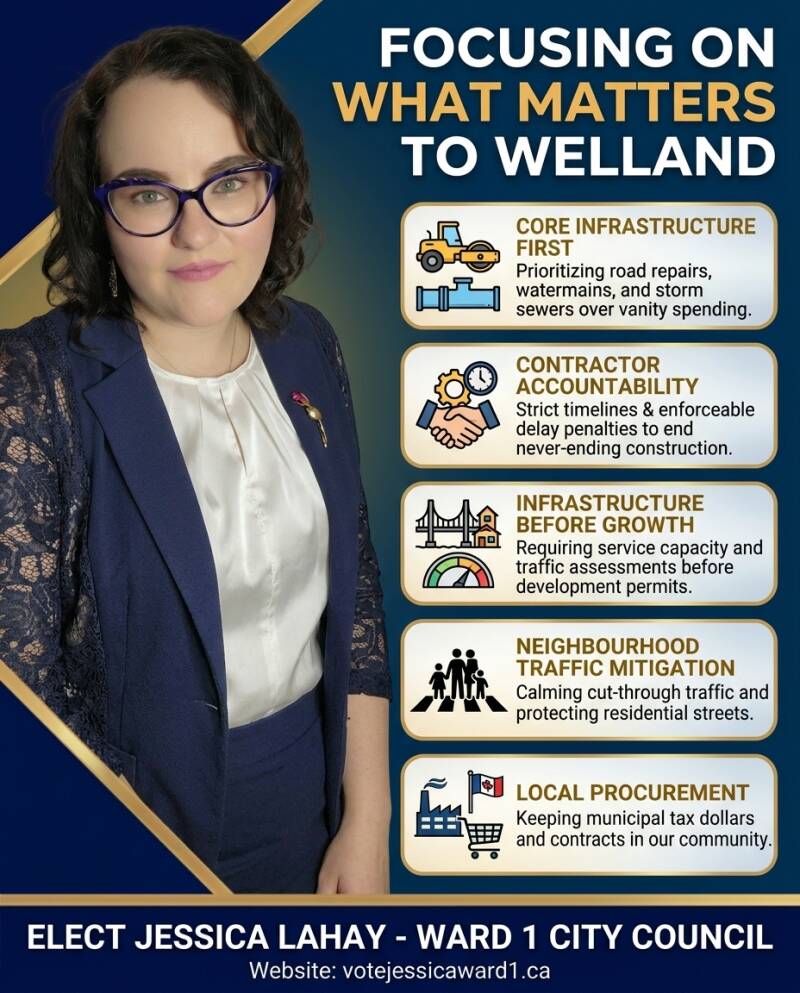
Core Infrastructure First: Prioritizing watermains, storm sewers, and road resurfacing over discretionary pet projects.
-
Open Financial Reporting: Going beyond high-level budget books by providing residents with accessible, quarterly dashboards that clearly show where capital dollars are being spent and whether projects are staying on budget.
-
Operational Discipline: Scrubbing administrative overhead and consulting fees to ensure maximum funds go straight to frontline city services.
2. Contractor Accountability: Ending "Never-Ending" Construction
Prolonged road closures have disrupted commutes across the city for months—and in some corridors, years. Residents routinely see roads excavated, barricades erected, and then weeks of zero activity while detours choke daily travel.
City Hall must reform how municipal capital contracts are structured and managed:
-
Enforceable Delay Penalties: Municipal tenders must include binding completion timelines with clear financial liquidated damages for non-compliance.
-
Phased Excavation Requirements: Contractors should not be permitted to tear up entire road corridors until materials, equipment, and crews are physically staged and ready to complete work consecutively.
-
Business Mitigation Support: Prolonged closures severely harm local storefronts and service plazas. The city must implement a formal construction mitigation protocol that includes clear detour wayfinding, dedicated temporary parking, and direct communication channels for impacted business owners.
3. Infrastructure Before Infill: Responsible Growth
Welland continues to see population growth and residential development applications. Growth in itself is not the problem—unplanned growth that outpaces basic infrastructure is.
When multi-unit developments and new subdivisions are approved without prior upgrades to surrounding infrastructure, the results are immediate: overloaded storm lines, backed-up sewers, and dangerous gridlock.
-
Upfront Capacity Studies: City Council must mandate that water, wastewater, and traffic impact assessments are fully vetted and upgraded before building permits are signed off.
-
Development Charges That Cover Real Costs: Growth must pay for growth. Longtime residents should not shoulder tax hikes to fund basic trunk extensions and arterial widenings required by private developments.
4. Traffic Mitigation and Safe Neighbourhood Streets
Major construction detours and rapid residential infill have pushed heavy traffic off regional roads and directly onto residential side streets. Streets where children play and residents walk their dogs have turned into high-speed bypasses for frustrated motorists.
Managing cut-through traffic requires proactive neighbourhood design, not just reactive policing:
-
Targeted Traffic Calming: Expanding the use of physical calming measures, such as speed cushions, curb extensions, and raised pedestrian crossovers in areas heavily impacted by detours.
-
Strategic Detour Planning: Requiring city staff to assess neighbourhood ripple effects before approving construction detour routes, ensuring residential streets are not overburdened.
-
Digital Speed Feedback Signs: Deploying speed radar boards dynamically to high-complaint areas to collect hard data and deter speeders.
5. Keeping Tax Dollars Local
A municipal budget is one of the most powerful economic development tools in the region. Too often, routine municipal maintenance and tender contracts are awarded to firms outside Niagara, sending local tax dollars out of town while local businesses and tradespeople are overlooked.
Modernizing Welland’s procurement policy to support local sourcing keeps public investment circulating right here in our community—supporting local jobs, generating local revenue, and creating direct community accountability when work is performed.
Bringing City Hall Back to Basics
Local government works best when it stays focused on its core mandate: reliable infrastructure, responsible budgeting, and safe, walkable neighbourhoods. As we head toward the municipal election, demanding clear answers on these practical issues is how we hold City Hall accountable.
Let’s focus the conversation on real solutions that improve daily life in our wards.
Add comment
Comments